For the past 17 years, Austin, TX has hosted Austin City Limits. What started as 2-day festival with tickets selling at 25$ a piece has turned into a 2-weekend, 3-day festival with 450,000 attendees. Throughout the years, the festival has dealt with a few setbacks here and there but has benefitted immensely from their partnering with Austin Parks Foundation.
The festival was originally created in response to the television show Austin City Limits on PBS. The show featured two 30 minute segments of musicians from various genre’s playing their music in front of a live audience and being interviewed by the show’s host. The weekly, hour long special was what gave Austin its reputation of “Live Music Capital of the World.”
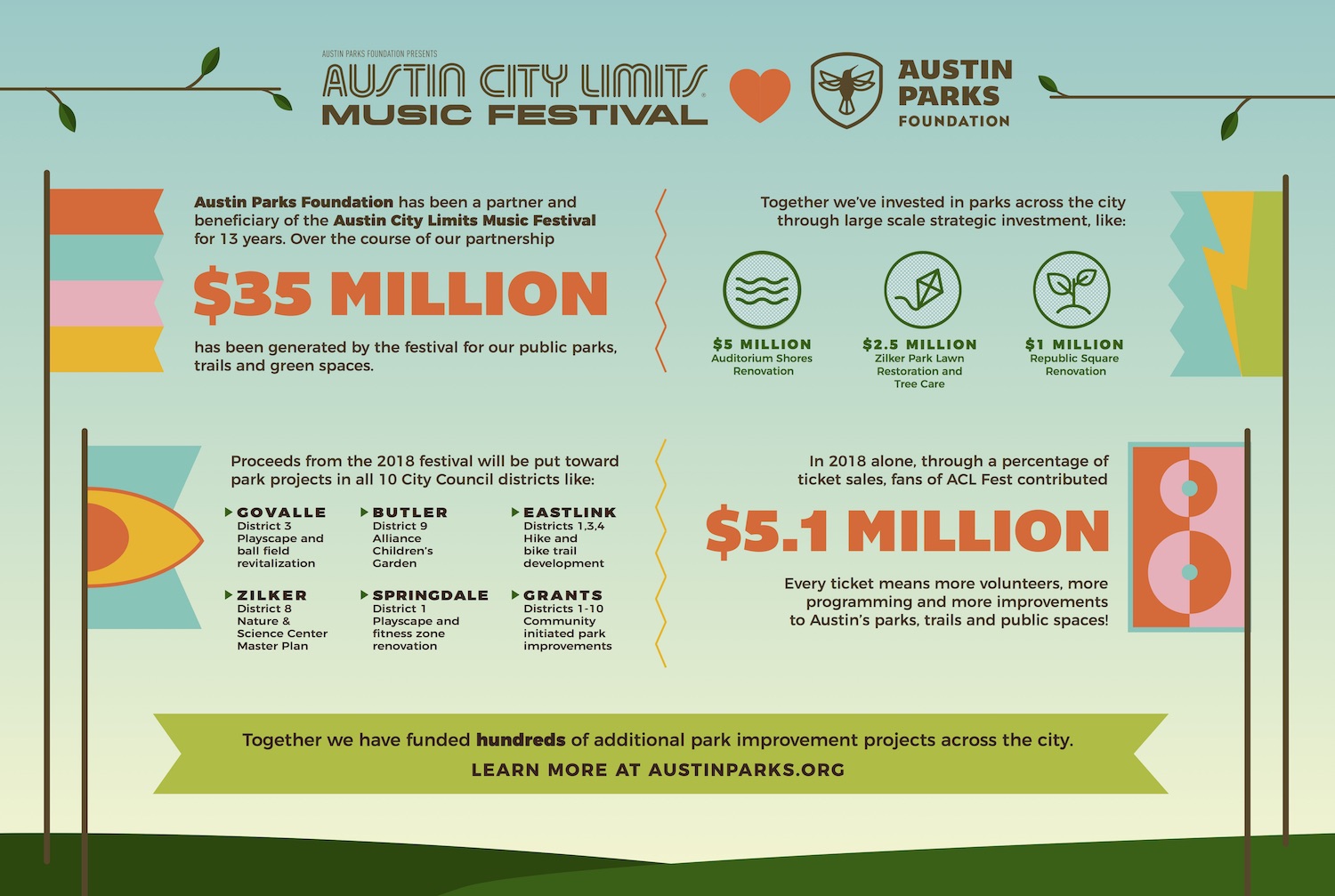
Thirteen years ago, the festival partnered with Austin Parks Foundation and has since devoted part of their mission to sustainability and giving back to the community. The ACL website has a section dedicated to sustainability which features brief captions about their various efforts and each year they use data visualization techniques to highlight their previous success.

How They’re Helping
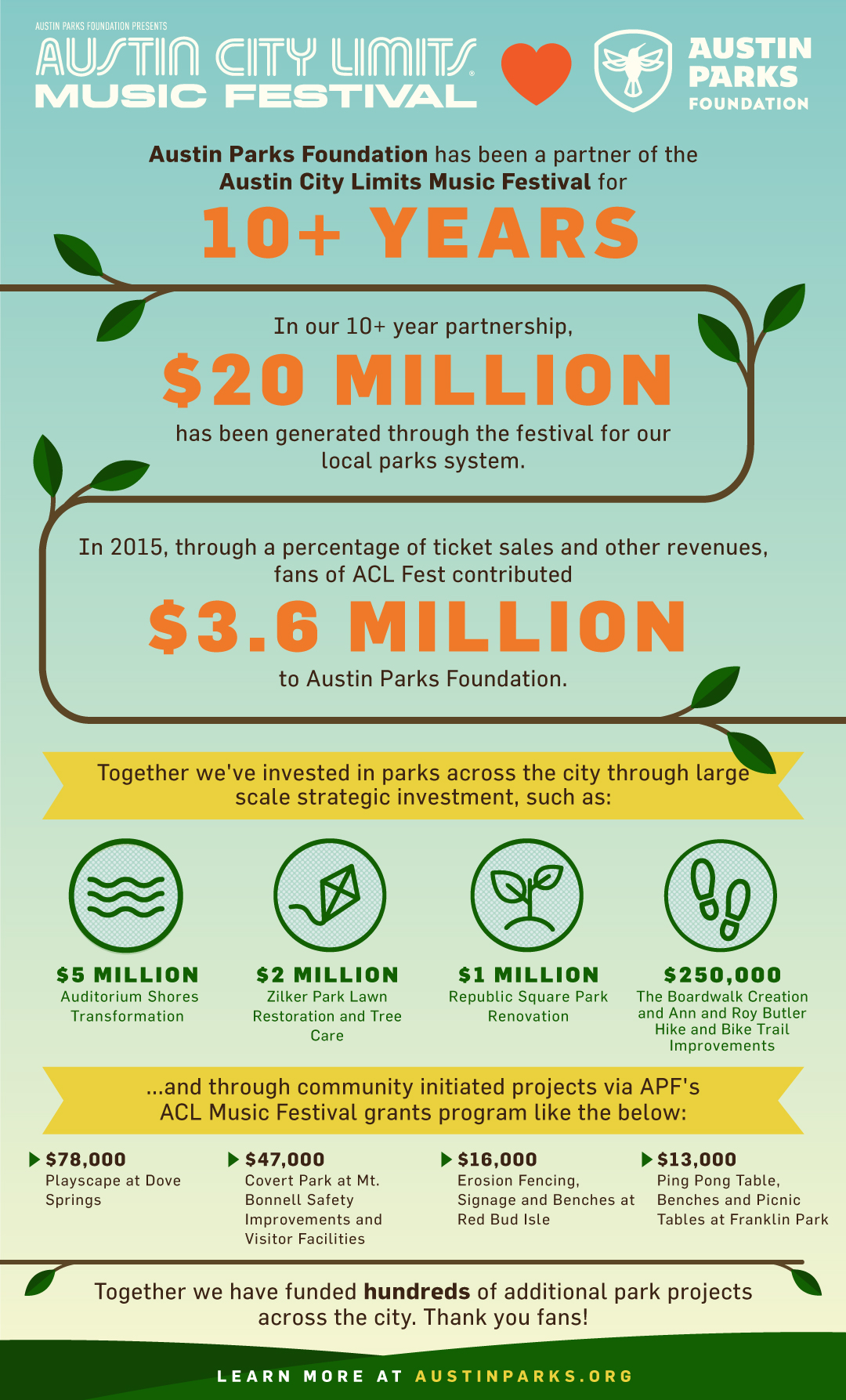
Although this idea of festival sustainability is nothing new, ACL has a special twist on how they are improving their local parks. According to their “sustainability report” (which is actually just an infographic) the festival has generated $35 million towards supporting public parks, trails and green spaces.
The money has gone towards multiple park restoration projects, specifically Zilker park where the festival is held each year. The ticket donations have also allowed APF to create programs centered around community engagement, like adding ping pong tables and picnic benches to local parks.
ACL Festival seems to represent the city as a whole, one that is young, trendy and up-and-coming for millennials. That vibe is also reflected through their website which is informational but also brief. Their sustainability tab is broken into five different sections and each section has descriptions of ‘why it matters’ and ‘what you can do.’
Why They Should Be Using Graphics
The infographics the website has used over the past few years have a similar and simple theme and highlight most of the same information but are important to include, especially if they are using the graphics at the festival. Most of the festival attendees are going to listen to the music and generally experience the festival while the sustainability and charitable work are somewhere in the background. Infographics at the festivals are important because they allow for festival goers to absorb some impactful and important information without having to stop what they’re doing while cruising around the event.
 Within Earshot